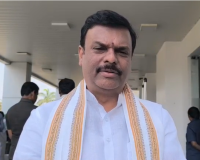
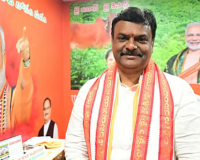
Amaravati, April 2, 2026: BJP state media panellist and Ahikod constituency election incharge Taduvai Ramakrishna on Wednesday welcomed the Central Government's introduction of a bill in the Lok Sabha to accord statutory recognition to Amaravati as the permanent capital of Andhra Pradesh, describing it as a defining milestone in the state's development trajectory.
In a statement released on the occasion, Mr. Ramakrishna said the TDP-BJP-Janasena coalition government, under the leadership of Chief Minister N. Chandrababu Naidu, was advancing steadily towards its goal of a Vikasit Andhra Pradesh, and that the legislative recognition of Amaravati would serve as a gateway to accelerated growth for the state.
Modi's Role Underscored
Mr. Ramakrishna credited Prime Minister Narendra Modi's leadership for bringing focused Central attention to Andhra Pradesh's development needs — through attracting investments to the state and according priority to Andhra Pradesh in successive Union Budgets. He also noted that Minister Nara Lokesh's ongoing initiatives were contributing meaningfully to the state's economic progress. "The people of Andhra Pradesh repose deep trust in Prime Minister Modi, and that trust is being reciprocated through concrete action," he said.
Amaravati as an Economic Catalyst
Elaborating on the significance of the capital bill, Mr. Ramakrishna argued that the development of Amaravati would act as a catalyst for industrial investment, job creation, and comprehensive economic growth across the state. A legally secured and actively developed capital city, he said, would send a strong signal to domestic and international investors about Andhra Pradesh's stability and long-term potential.
Mr. Ramakrishna trained sharp criticism on the previous YSRCP administration, alleging that it had pursued authoritarian tendencies and had deliberately obstructed the state's development during its five-year tenure. He said the people of Andhra Pradesh had recognised and decisively rejected those policies at the ballot box.
Going a step further, he called upon YSRCP leaders who genuinely wished for Andhra Pradesh's development to immediately leave the party, asserting that a growing perception had taken hold among the public that the party's leadership was working against the state's interests rather than for them.