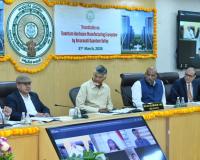
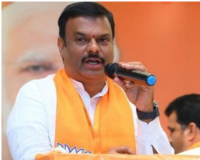
Amaravati: Andhra Pradesh Health Minister Satyakumar Yadav on Monday sounded a sharp warning over the state's sharply declining fertility rate, calling it a new kind of population time bomb that could trigger severe economic and social consequences if left unaddressed. In a detailed statement released here, the Minister said the state's Total Fertility Rate — the average number of children a woman bears in her lifetime — had fallen to an alarming 1.50, well below the replacement level of 2.10 required for population stabilisation.
Announcing that the state government had formulated a new Population Stabilisation Policy Framework, the Minister said the document would be placed in the public domain shortly, on the directions of Chief Minister N. Chandrababu Naidu, for wide consultation among citizens, media, and other stakeholders.
A Demographic Shift in the Making
Presenting a sobering statistical picture, the Minister said the state's population growth rate had declined from 7.10 per cent during 2011–15 to 1.70 per cent at present, and was projected to fall further to 0.30 per cent by 2035 if the current trend continued. The fertility rate, which stood at 1.68 not long ago, has already slipped to 1.50 and risks declining further without corrective intervention.
The Minister pointed to a widening generational imbalance. The median age of Andhra Pradesh's population currently stands at 32.50 years, compared to the national median of 28 years — a gap that he said illustrated how much faster the state's population was ageing relative to the rest of the country.
Projections underlying the new policy framework paint a stark picture: the share of children below 14 years in the state's population, which stood at 25 per cent in 2011, is expected to fall to 15 per cent by 2036. Simultaneously, the proportion of those above 60 years is projected to nearly double from 10 per cent to 19 per cent by 2036, and rise further to 23 per cent by 2047 — a trajectory that the Minister warned would seriously impede the state's Swarna Andhra development goals.
"If the present trend continues, the demographic dividend we currently enjoy will disappear by 2040, and we will instead be burdened with a rapidly ageing population," the Minister cautioned.
A New Policy Direction
Marking a significant departure from decades of population control policy, the new framework shifts its focus from limiting family size to creating conditions under which families voluntarily choose to have more children. The Minister said the earlier policy of state-directed family planning targets had run its course and that the time had come to build a supportive environment for larger families.
The framework is built around five pillars — Matrutva (maternal and child health), Sanjeevani (lifelong health monitoring through individual health records), Shakti (women's empowerment), Kshema (dignified and productive ageing), and Naipunya (skill development across life stages) — each designed to reinforce the other in a mutually supportive architecture.
Women's Empowerment at the Centre
The Minister underlined that women's empowerment was central to the success of the new policy. The framework aims to raise women's participation in the workforce from the current level to 60 per cent — an increase of over 25 percentage points — over the next decade, which the government estimates would contribute a 15 per cent increase in the state's Gross State Domestic Product.
The policy also proposes to bring down the proportion of women undergoing sterilisation from the current 70 per cent to 50 per cent within five years, and to extend free infertility treatment services to the estimated 12 lakh families in the state facing fertility-related challenges.
Chief Minister's Initiative
Attributing the policy initiative to Chief Minister Naidu's foresight in anticipating long-term demographic challenges, the Minister said the framework had emerged from the Chief Minister's thinking on proactively addressing problems before they reached a point of no return.
The Minister called on the public, media, and civil society to engage actively with the policy document once released, and to support the building of a broader social movement around population stabilisation. "The next ten years are critical. We must achieve a fertility rate of 2.10 by 2035 to lay the foundation for a stable and prosperous Andhra Pradesh," he said.