BJP Trains Cadre on Digital Outreach: Social Media is Party's Most Powerful Weapon, Says Velagaleti Gangadhar
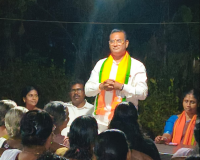
GUNTUR — In a sign of the times, the Bharatiya Janata Party is no longer leaving its digital strategy to chance. At a structured training programme held at BH College in the Brodipet area of Guntur's Western Constituency Third Mandal on Saturday, BJP workers gathered to learn one of modern politics' most essential skills — how to fight and win the battle for public opinion on social media.
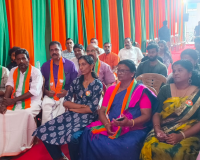
The awareness programme on social media usage was organised as part of a broader training session conducted under the leadership of Prashikshan Varg Pramukh Palapati Ravi Kumar — and it drew an engaged and enthusiastic turnout of party workers eager to sharpen their digital communication skills ahead of future electoral battles.
Social Media: The New Battlefield
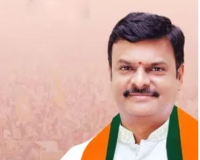
The session's chief speaker was Velagaleti Gangadhar — BJP State Media Co-Convener and Director of the Andhra Pradesh Brahmana Welfare Corporation — a man who clearly knows his subject and delivered it with conviction.
In the digital age, Gangadhar told the assembled workers, social media is not a luxury or an afterthought. It is the most powerful tool available for direct, real-time communication with the public — and no political worker worth their salt can afford to ignore it.
"In the current digital era, social media is the most powerful instrument for connecting directly with the people," Gangadhar said. "Platforms like Facebook, Twitter, and Instagram, when used effectively, can carry the party's ideology, the central government's development programmes, and welfare schemes to citizens rapidly and at scale."
It was a message delivered not just as inspiration but as instruction — practical, specific, and grounded in the realities of contemporary political communication.
NaMo App and Saral App: Every Worker Must Be On Board
Gangadhar went beyond general principles, urging every BJP worker present to actively use two specific digital platforms — the NaMo App and the Saral App — as essential tools of party organisation and communication.
These platforms, he explained, are not merely symbolic gestures toward digital modernity. They are functional tools through which party programmes can be coordinated, membership details managed, and real-time information shared efficiently across the party's vast organisational network.
"Every worker must use the NaMo App and the Saral App," Gangadhar said firmly. "Through these platforms, party activities, membership information, and organisational data can be managed effectively and efficiently."
The directive reflects a broader BJP strategy of building a digitally connected party structure — one where information flows quickly from the national leadership down to the booth level, and where every worker is a node in a coordinated communication network.
Three Responsibilities of Every Digital Worker
Gangadhar distilled the responsibilities of BJP workers in the digital space into three clear and actionable duties — a framework that gave the training session practical shape.
First, workers must ensure that accurate and truthful information about the party and the government reaches the public through social media channels. In an environment flooded with competing narratives, getting the correct facts out quickly is itself a form of political action.
Second, workers must actively counter false propaganda — identifying and responding to misinformation about the party, its leadership, and the central government's policies and programmes. In the digital age, silence in the face of falsehood is not neutrality. It is surrender.
Third, and perhaps most importantly, workers must use social media to build and deepen direct relationships with citizens — engaging genuinely, responding to concerns, and making the party accessible and human at the community level.
"It is the responsibility of every party worker to deliver true information to the people through social media, counter false propaganda, and strengthen direct relationships with citizens," Gangadhar said.
Booth-Level Digital Communication
The session closed with a rallying call that captured the strategic ambition behind the entire training exercise.
Gangadhar urged every worker to use social media responsibly — and to work toward strengthening digital communication at the booth level. In BJP's organisational philosophy, the booth is the fundamental unit of political action. A party that wins the digital battle at the booth level wins elections.
The directive to extend digital capability all the way down to the booth reflects the party's recognition that the social media revolution is not just a national phenomenon. It plays out in every neighbourhood, every community, and every local conversation — and a party that is not present and active at that level will lose the information battle where it matters most.
Distinguished Presence
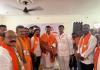
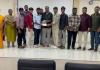
The training programme brought together a cross-section of BJP's organisational leadership in Guntur. Third Mandal President Behara Gayatri, BJP State Publicity and Literature Convener Palapati Ravi Kumar, Mahila Morcha State Secretary Hari Pavani, Mahila Morcha District Treasurer Dr. Sravanthi Emani Madhava Reddy, Nagasai, Jandhyala Pavan Kumar, Yashwant Lakara, Bala Rangaiah, Stalin, and a range of mandal leaders and party workers were present — reflecting the broad organisational commitment behind the initiative.
The Bigger Picture
Saturday's training programme in Guntur is part of a larger, deliberate BJP strategy to build a digitally empowered grassroots organisation capable of carrying the party's message directly to voters — bypassing traditional media and engaging citizens on the platforms where they already spend their time.
As India's political landscape grows increasingly digital, parties that invest in training their workers to communicate effectively online will hold a decisive advantage. Saturday's session in Brodipet was a small but significant step in that direction — one booth, one mandal, one trained worker at a time.