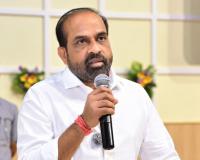
Kochi, Kerala, September 30, 2026 (Journalist File): Creating jobs for young people is the Andhra Pradesh government’s central priority, state Education, IT and Electronics Minister Nara Lokesh said at the India Today Conclave South 2026 in Kochi, outlining the government’s plans for employment, education reform, investment and emerging technologies.
In a conversation with senior journalist and India Today Consulting Editor Rajdeep Sardesai, Lokesh said the government had set a target of creating 20 lakh jobs in response to what he described as the primary demand coming from young people. He said the chief minister, ministers and officials were working toward attracting investment and building industries capable of generating employment.
Lokesh said employment generation had to begin with education and that the state was reviewing its education curriculum in consultation with industry. He cited investments in the energy sector and said companies including LG and Premier Energy had begun operations in the state. He said the government was also working to build skills among young people for emerging sectors ranging from horticulture to quantum computing.
On teacher recruitment and allegations surrounding the state’s DSC examination, Lokesh said the recruitment test had been conducted through a computer-based system and that allegations of irregularities had not been substantiated. He attributed the sports quota certificates at the centre of the controversy to the previous YSR Congress Party government and said the government would comply with any directions issued by the courts.
Lokesh said 16,000 teachers had been recruited under the current government through what he described as a transparent process. He said student-level data was being used to identify children at risk of dropping out and to improve educational outcomes.
He also outlined plans to introduce students to emerging technologies, including artificial intelligence and quantum computing. According to Lokesh, the state was setting up computer laboratories and exposing students to future technologies, while acknowledging that comprehensive education reform would take years.
On Amaravati’s proposed role as a quantum technology centre, Lokesh said the state was planning to establish a 156-qubit quantum computer in the capital. He said the government wanted to develop an ecosystem around quantum research, including material science and cryogenic technology.
Responding to questions about the Election Commission and the Special Intensive Revision of electoral rolls, Lokesh said the Telugu Desam Party had sought clarifications on several aspects of the process and had examined the Election Commission’s explanations. He said the party believed the explanations were satisfactory while maintaining that there was room to improve the electoral process.
Lokesh said the party had actively participated in voter mapping in Andhra Pradesh and submitted the required documents. He stressed the importance of ensuring that every eligible voter remained on the electoral roll.
Investment attraction was another major theme of his address. Lokesh said Andhra Pradesh was following a “3S” approach — speed, service and stability — to attract investors. He said the state was focusing on faster approvals, monitoring projects through an ERP system and providing investors with a stable policy framework.
The minister said the government was pursuing investments across 23 clusters, covering sectors ranging from agriculture and horticulture to IT, steel, cement, aquaculture, pharmaceuticals, medical devices and quantum technology. He said the objective was not merely to bring individual companies into the state but to build complete ecosystems around major industrial clusters.
Lokesh also discussed the government’s Real Time Governance system, describing it as a data layer that brings together information from different departments and uses it to generate alerts, recommendations and advisories for government agencies. He said data could assist farmers with decisions on sowing and crop selection based on weather forecasts and could also help the government plan water and electricity requirements.
On Andhra Pradesh’s fiscal position, Lokesh acknowledged that the financial situation remained a challenge but said the state economy was growing rapidly. He pointed to GST growth and said he was confident that the state would be able to manage its debt over the long term.
The minister also addressed concerns over population trends and future demographic changes. He said Andhra Pradesh’s replacement fertility rate had fallen to about 1.5 and argued that population management would become an increasingly important issue for southern states. At the same time, he said improving education and creating employment opportunities remained essential.
Reflecting on his tenure in government, Lokesh said one of the most important lessons he had learned was the need to listen patiently and gather feedback from different sections of society. He said no system was perfect and that every institution offered opportunities for improvement.
Asked about his political ambitions and his family’s political legacy, Lokesh said his immediate priority was reforming the education system rather than seeking the post of chief minister. He said his focus was on delivering changes that would improve students’ futures.
Lokesh also described investment outreach as a continuous part of his political and ministerial responsibilities. Even while attending sporting events, he said, he uses opportunities to meet entrepreneurs and discuss potential investments in Andhra Pradesh.







.jpeg)